What I Treat › Spine
Spine
Cervical Deformity
Cervical deformity occurs when advanced degenerative changes cause the spine to lose its normal shape. It can also result from trauma, congenital abnormalities or previous surgery.
Left untreated, it can lead to chronic pain, neurological deficits and a reduced quality of life.
Symptoms
- Neck pain and stiffness
- Difficulty holding the head upright
- Trouble looking straight ahead
- Numbness or weakness
- Problems with balance
How cervical deformity is diagnosed
Physical and neurological exam
An exam shows how the deformity affects your posture, movement, strength and sensation.
Standing X-rays
Full-length X-rays taken while you stand measure the alignment of your neck and whole spine, which is essential for planning correction.
MRI and CT
These show whether the spinal cord or nerves are being compressed and give a detailed view of the bones for surgical planning.
Treatments for Cervical Deformity in Denver & Fort Collins
Treatment depends on the severity and cause of the deformity, and on how much it affects your daily life.
Non-Surgical Care
For milder deformity, physical therapy to strengthen the neck and upper back, along with pain management, can help with comfort and function.
Surgical Realignment and Stabilization
When the deformity compresses the spinal cord or nerve roots, surgery can restore posture and relieve the pressure. Many patients experience significant relief and better mobility.
Patient stories
72-year-old woman
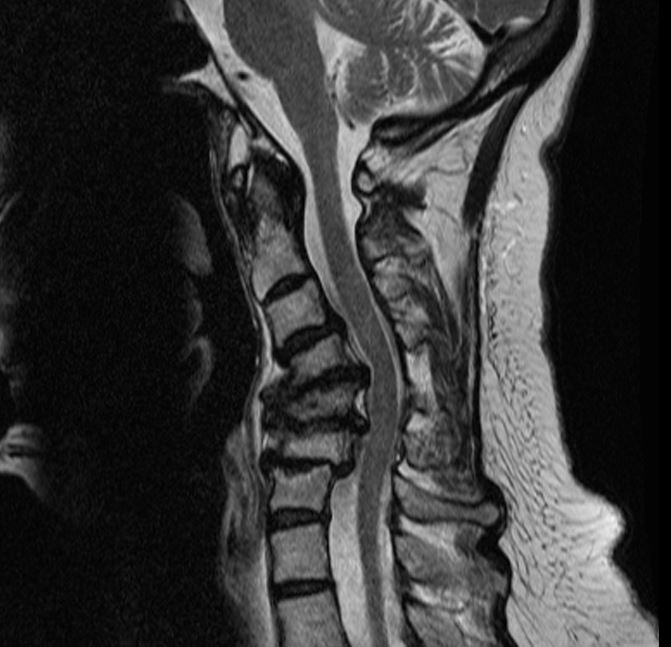
Over a two year span, a 72 year old woman noticed increasing hand weakness, worsening shooting pain in her arms, and trouble walking requiring short, shuffling steps. An MRI showed severe degenerative changes in her neck, with her neck losing its natural curvature and tipping forward. We performed a surgery where the fifth and sixth vertebrae in her neck were removed, (corpectomy), a C3-4 ACDF was performed, and posterior instrumentation was placed to hold everything together. Her postoperative imaging showed correction of the deformity. She recovered well after surgery and regained her strength and improved walking.

More Spine conditions
Request an Appointment with Dr. Arias
Dr. Eric J Arias, MD – Neurosurgeon & Neurointerventional Surgery